
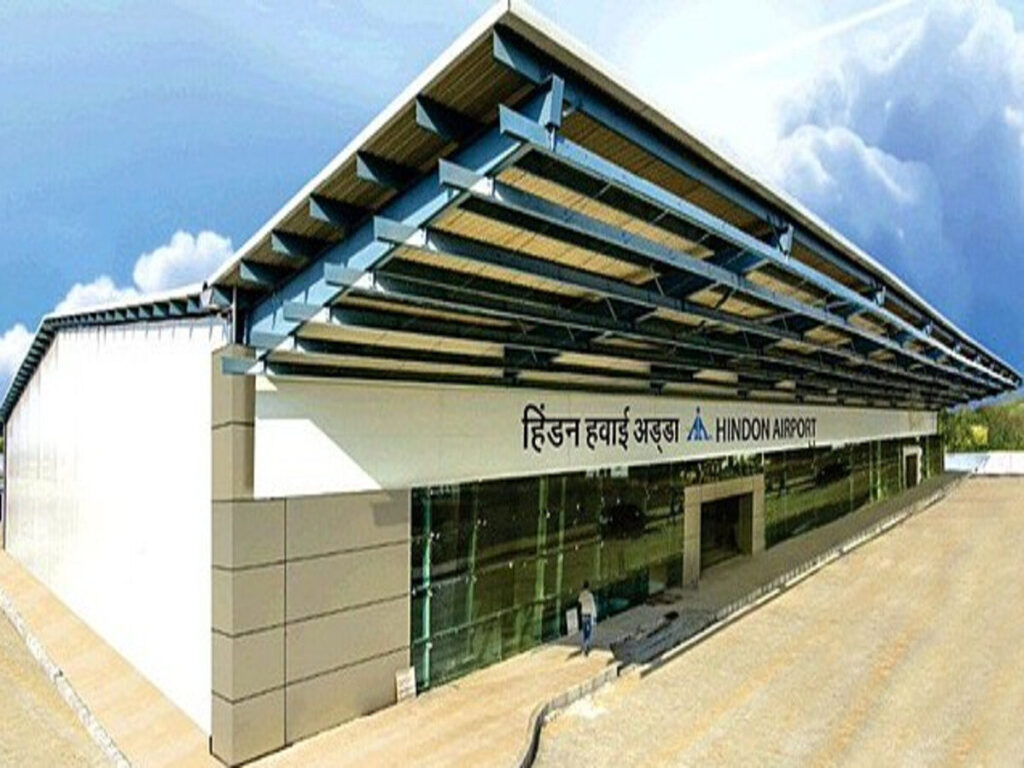
While most attention in Indian aviation remains fixed on metro airports, Hindon Airport has quietly rewritten the regional travel narrative in 2025. Once operating with minimal civilian activity, the Ghaziabad-based airport has rapidly evolved into a key secondary gateway for the Delhi-NCR region, driven by changing passenger preferences and expanded airline operations.
The airport’s transformation is evident in its recent surge in passenger movement. In November 2025 alone, Hindon handled over 1.22 lakh travellers, a sharp contrast to the modest traffic recorded during the same period last year. This dramatic rise reflects not just increased flight availability, but a broader shift in how travellers from western Uttar Pradesh and eastern NCR are choosing to fly.
Despite being a defence airfield with restricted civilian operating hours limited to daylight, Hindon has benefited from targeted airline expansion. The entry of Air India Express and IndiGo during 2025 marked a turning point, significantly widening destination choices and improving frequency. What was once a limited UDAN-only operation has now become a well-connected regional airport with consistent daily movement.
Airport officials point out that the steady addition of flights has created a reliable travel ecosystem. With nearly 50 aircraft movements every day, Hindon has started functioning as a dependable alternative for passengers seeking efficiency over scale. For many flyers, especially business and leisure travellers from Ghaziabad, Noida and nearby districts, the airport offers a simpler, faster experience compared to navigating congestion at Indira Gandhi International Airport.
Airlines have also responded to this demand shift. Air India Express now operates multiple weekly services connecting Hindon to major metros and religious destinations, while IndiGo has strengthened its presence with A320 operations linking the airport to key domestic routes. The growing network has reduced dependency on Delhi’s primary airport and redistributed short- to medium-haul traffic more efficiently across the NCR.
Recognising this momentum, airport authorities have begun planning infrastructure upgrades to support sustained growth. Efforts are underway to expand aircraft parking capacity, with proposals to increase parking bays and optimise space in coordination with defence authorities. These steps are expected to enhance operational flexibility and accommodate rising airline interest.
As passenger behaviour continues to favour convenience and accessibility, Hindon Airport’s rise signals a larger trend in India’s aviation landscape — the emergence of regional airports as practical solutions to metro congestion. If current growth patterns continue, Hindon is well-positioned to play a long-term role as a critical support hub within the NCR’s expanding air travel network.