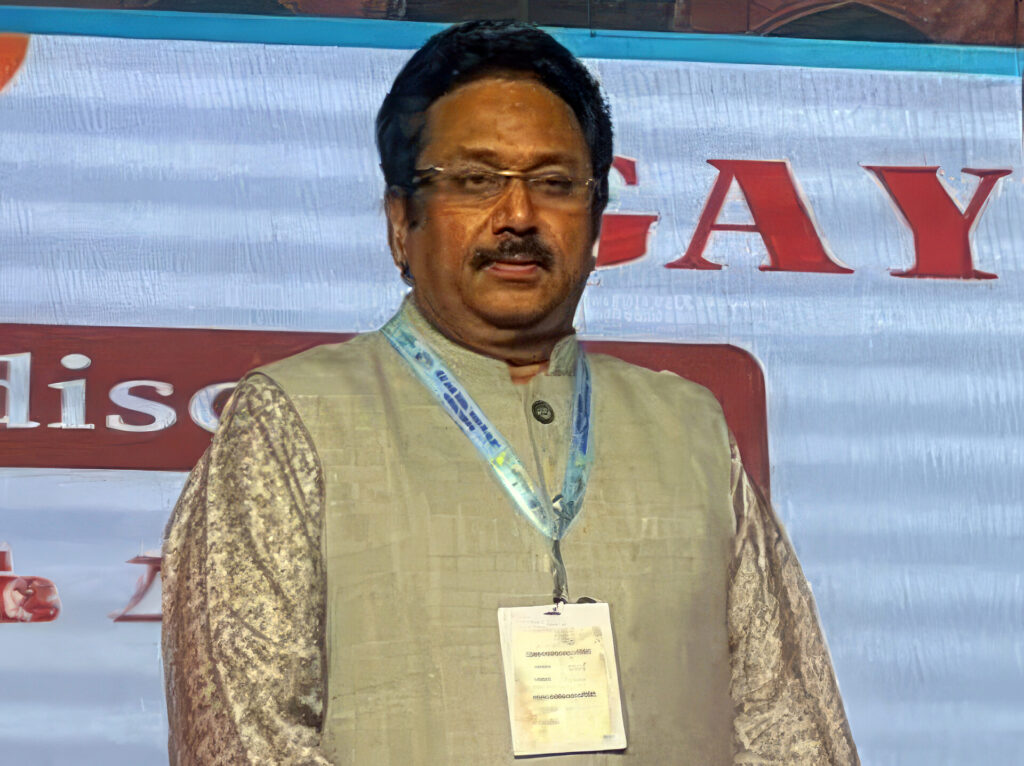
When people think of Visakhapatnam, they picture beaches, sea breeze and relaxed weekend escapes. But according to OSR Naresh, the real story of Andhra Pradesh’s “hidden gem” is far bigger — a story of nuclear submarine infrastructure, artificial intelligence hubs, green hydrogen, semiconductor ambitions and billion-dollar global investments.
His central argument was clear: before the world invests in Andhra’s tourism, it must first understand the extraordinary transformation already underway in Visakhapatnam.
Visakhapatnam is not merely a coastal leisure city. It is home to the Eastern Naval Command, the backbone of India’s eastern maritime defence architecture. At Hindustan Shipyard Limited, critical naval assets are constructed for the nation, while advanced submarine infrastructure operates in the region. A strategic base at Rambilli further underscores the city’s national importance. This is not a passive seaside town — it is one of India’s most strategically significant urban centres.
Layered onto this defence strength is a fast-emerging clean energy ecosystem. Green hydrogen initiatives, desalination-linked fuel systems and renewable energy projects are positioning the city as a forward-looking industrial hub.
At the same time, global technology players are turning their attention toward Andhra Pradesh’s digital future. Large-scale investments in data infrastructure, artificial intelligence capabilities and high-capacity connectivity are reshaping Visakhapatnam into what Naresh describes as India’s “digital coastline.” With undersea cables landing here and major data facilities being established, the city’s bandwidth and digital infrastructure are fast approaching global standards.
Industrial momentum extends beyond technology. Mega investments in steel, semiconductor manufacturing, rare earth processing and renewable energy are taking shape. Multiple IT companies have secured land allocations in recent months, strengthening the knowledge economy alongside heavy industry. In short, the industrial backbone is rapidly consolidating.
And here lies Naresh’s pivotal question: if billions are flowing into defence, AI and green energy, why shouldn’t tourism aspire to the same scale?
Drawing parallels with Dubai’s transformation through global entertainment brands like Universal Studios and The Walt Disney Company, he argued that Andhra Pradesh must think bigger. Rather than limiting ambition to ₹500–₹1,000 crore projects, the state could invite two or three mega entertainment destinations — water parks, theme parks or integrated leisure cities — each attracting billion-dollar investments. Such projects would generate large-scale employment and pull international visitors, not just domestic travellers.
But Naresh’s vision goes even further. He proposes converting Andhra’s industrial and agricultural strengths into immersive tourism experiences. Why not guided shipyard tours? Educational visits to advanced manufacturing hubs? Showcasing textile factories employing thousands of women under one roof? Curated tours of aquaculture farms, cocoa cultivation, chocolate production units or green hydrogen facilities? Andhra Pradesh leads India in fish, shrimp and egg production and is among the top producers of several agricultural exports. Transforming these strengths into structured “educational tourism” could create a category unique in India — appealing to students, researchers, investors and global visitors alike.
Religious and heritage tourism remains another powerful pillar. While Tirumala Venkateswara Temple draws massive pilgrim footfall, numerous Shakti Peethas, tribal belts, waterfalls and Buddhist sites await systematic promotion. The constraint, Naresh suggests, is not heritage but infrastructure. With new airports, ports, malls and premium hospitality brands expanding their footprint, the enabling ecosystem is aligning.
His broader message is simple yet ambitious. IT scaled because land and incentives were provided. Renewable energy expanded because policy backed it. AI and defence grew because long-term vision supported them. Tourism, he argues, now requires the same seriousness of intent.
If Andhra Pradesh combines billion-dollar entertainment investments, industrial experience tourism, agricultural circuits, spiritual travel and premium hospitality infrastructure, Visakhapatnam could evolve into India’s most diversified tourism hub — a city where one could attend an AI summit in the morning, tour a green hydrogen facility in the afternoon, unwind at a five-star beach resort by evening and visit a Shakti Peetha the next day.
Visakhapatnam is not waiting for transformation — it is already transforming. The real question, as Naresh’s address makes clear, is whether tourism will rise to match the scale of ambition already visible across defence, energy, industry and technology.
If that alignment happens, Andhra Pradesh will not merely rediscover its hidden gems. It will redefine what a 21st-century tourism ecosystem can look like.