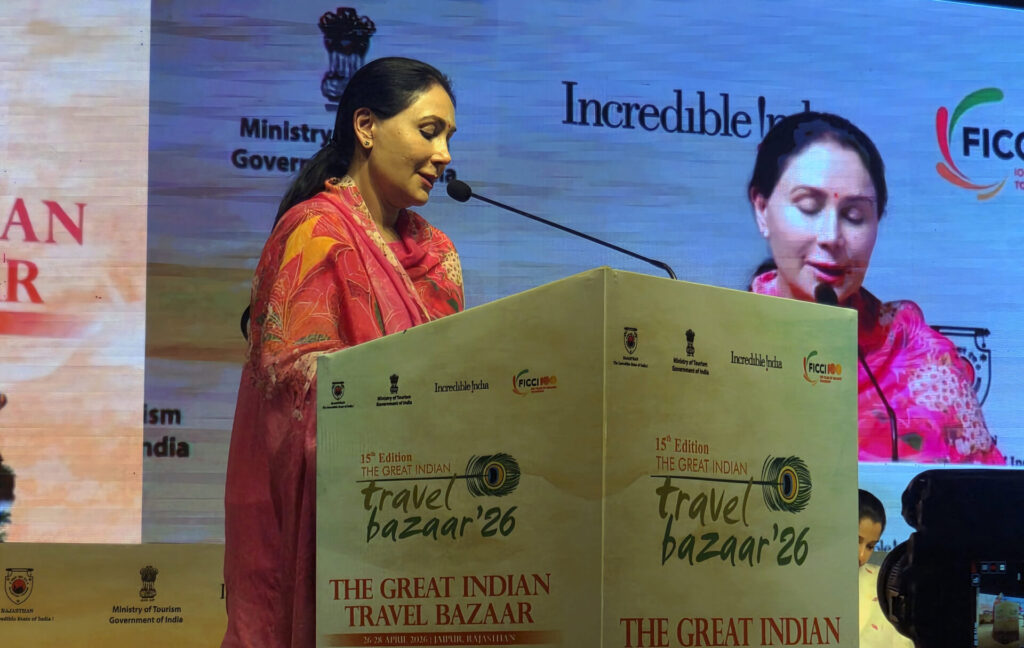
Rajasthan is steadily positioning itself as one of India’s most dynamic and globally competitive tourism destinations, with a clear focus on partnerships, high-value experiences, and long-term growth. This vision was strongly articulated by Diya Kumari, dy CM and tourism minister – Rajasthan, during the inauguration of the 15th edition of the Great Indian Travel Bazaar (GITB) in Jaipur.
Calling GITB more than just a tourism event, she described it as a “platform for partnerships, scale and global opportunity,” reflecting Rajasthan’s growing leadership in tourism and India’s expanding engagement with international markets.
Highlighting the national vision, she credited Narendra Modi for recognizing tourism as a key driver of economic growth, employment and cultural confidence. According to her, tourism today is not just a sector but a transformative force contributing to inclusive development, with Rajasthan at the forefront of this shift.
Under the state government’s leadership, tourism has been positioned as a core growth engine, supported by transparent governance, private investment and sustainability-driven policies. Rajasthan’s strength lies in its diversity—from the lakes of Udaipur and desert landscapes to historic forts, wildlife reserves and living heritage cities—offering immersive and multi-dimensional travel experiences.
However, the strategy now goes beyond traditional heritage tourism. The state is actively expanding into experience-led tourism, with targeted initiatives such as the Thar Cultural Circuit, restoration of forts and heritage structures, and a renewed focus on stepwell conservation—an area that has also received direct attention at the highest level.
At the same time, emerging destinations like Shekhawati are being brought into focus, with efforts to improve infrastructure, connectivity and visibility. The intent is clear: to move beyond conventional circuits like Jaipur, Udaipur and Jodhpur, and encourage repeat travellers to explore lesser-known regions.
Infrastructure development remains central to this transformation. The state is strengthening last-mile connectivity, upgrading visitor management systems and enhancing tourist safety through dedicated support mechanisms. These efforts are aimed at making Rajasthan not just attractive, but also efficient and accessible for global travellers.
Rajasthan is also diversifying its tourism portfolio by focusing on segments such as MICE, global events, spiritual tourism and film tourism. Destinations like Khatushyamji, Chambal Riverfront and Sambhar Wetlands are being positioned to expand the state’s appeal beyond its traditional offerings.
Reinforcing the state’s ambition, she emphasized a clear roadmap—driving investment, generating employment, and building a globally competitive tourism ecosystem. The focus, she noted, is on high-value tourism, experience-driven products and sustained international collaboration.
Her message to the global travel trade was direct and strategic: Rajasthan is not just a destination to visit, but one to experience—and partner with.