
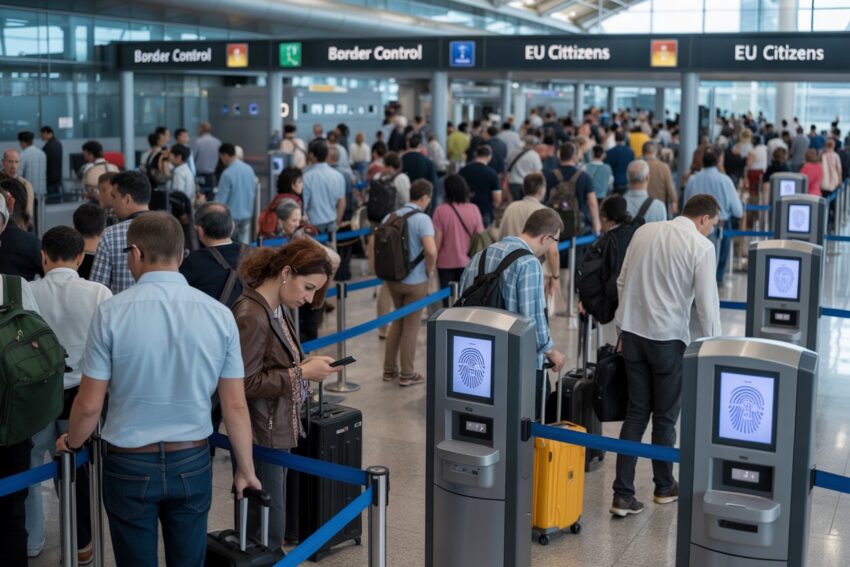
Europe’s upcoming Entry/Exit System (EES) is raising concerns across the global travel industry as airports prepare for major operational disruptions during the busy summer travel season. The new biometric border control system, expected to be implemented across the Schengen region, will digitally record the entry and exit details of non-EU travellers, replacing traditional passport stamping.
According to travel industry reports, airports across Europe are already warning passengers about potential long queues, extended immigration procedures, and missed flight connections once the system becomes fully operational. Aviation experts believe some of Europe’s busiest hubs including Paris, Amsterdam, Madrid, and Rome could witness significant passenger congestion during peak travel periods.
The EES system will require travellers from countries including India, the UK, and the United States to undergo biometric verification such as facial scans and fingerprint registration upon entering Europe. While the European Union says the system is aimed at strengthening border security and improving traveller monitoring, airlines and airport operators fear the transition could initially create widespread chaos.
Travel companies are advising passengers to arrive much earlier at airports and keep additional time for immigration procedures. Industry bodies have also expressed concerns over the impact on tourism flows, especially as Europe prepares for one of its busiest summer seasons in recent years.
For Indian travellers planning holidays across Europe, the new border procedures may add extra waiting time at airports and increase the possibility of delays during transit and immigration clearance.