India’s high-altitude tourism landscape may be set for a major transformation after the Border Roads Organisation (BRO) created the world’s highest motorable road across Mig La Pass in eastern Ladakh, opening fresh possibilities for adventure, expedition and experiential travel in one of the planet’s most extreme terrains.
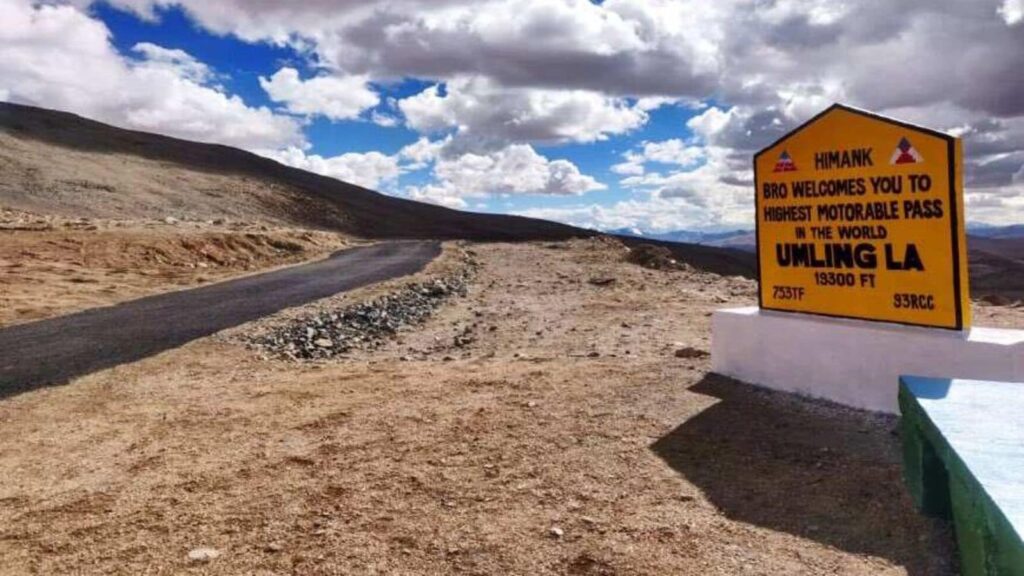
Constructed at a staggering altitude of 19,400 feet (5,913 metres), the new road surpasses the previous global record held by Umling La and is now officially the highest motorable road in the world. Developed under BRO’s Project Himank, the route forms part of the strategic Likaru–Mig La–Fukche alignment connecting the Hanle region with Fukche village near the Line of Actual Control.
Beyond its strategic significance, the achievement is being viewed as a potential game changer for high-altitude tourism in Ladakh. Industry observers believe Mig La could emerge as the next major attraction for motorcycle expeditions, self-drive journeys, ultra-premium adventure travel and high-altitude exploration tourism.
The route is expected to strengthen Ladakh’s positioning as a global destination for experiential and frontier tourism, particularly among international travellers seeking extreme-altitude road experiences. Travel experts also see strong future potential for curated overland journeys, photography expeditions and endurance travel circuits around Hanle, which has already gained international attention for astro-tourism and its dark-sky reserve.
BRO officials stated that the road will significantly improve connectivity for remote settlements including Hanle and Fukche, especially during harsh winter months when access remains severely restricted. Enhanced road infrastructure is expected to support local communities through improved transportation, emergency access and movement of supplies.
Executing the project at such extreme elevations posed extraordinary engineering challenges. Teams worked in freezing temperatures, snowstorms, icy winds and dangerously low oxygen levels, where oxygen availability drops to nearly half of what is experienced at sea level. The project was completed under the leadership of Brigadier Vishal Srivastava, with BRO personnel commemorating the milestone by hoisting the Indian national flag and the BRO flag at Mig La Pass.
Interestingly, Mig La now stands higher than both Everest Base Camps — the South Base Camp in Nepal and the North Base Camp in Tibet — underlining the scale of the achievement.
With Ladakh already attracting global attention for its dramatic landscapes and adventure appeal, the creation of the Mig La route could further elevate India’s standing in the fast-growing segment of extreme and experiential tourism while simultaneously strengthening critical border infrastructure in the Himalayas.