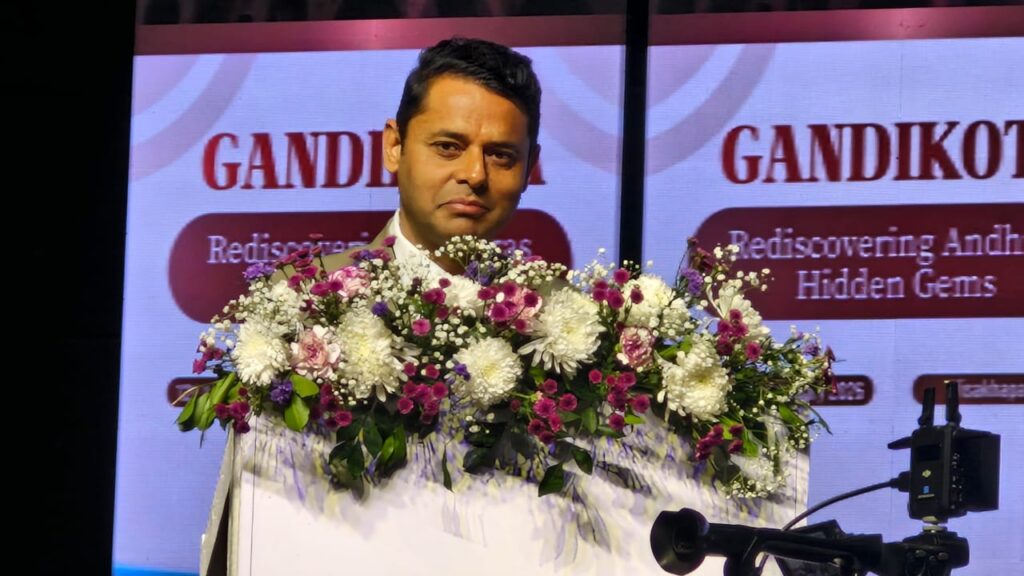
Showcasing a grassroots-driven tourism transformation, *Vivek Acharya, Managing Director of the Chhattisgarh Tourism Board, highlighted how rural and community-led tourism initiatives are reversing migration, generating livelihoods and earning global recognition for the state.
Speaking during a panel discussion at the ADTOI National Travel Mart in Visakhapatnam, Acharya cited Dudhmaras village in Bastar district as a model of sustainable rural tourism. In 2024, Dudhmaras was among 60 destinations selected globally by the United Nations, and was the only Indian village to make the list. A United Nations team is scheduled to visit the village on February 22 for a week-long assessment to consider its inclusion among the world’s best rural tourism villages under the UNWTO framework.
From Migration to Model Village
Dudhmaras, located just three kilometres from the gate of *Kanger Valley National Park*, has transformed dramatically since the COVID-19 pandemic. During the lockdown, many local youth who worked as daily wage labourers in Jagdalpur were forced to return home.
One such youth, Man Singh, approached park authorities for employment opportunities. The park director suggested starting bamboo rafting activities and capped visitor numbers inside the park, diverting additional tourists to the nearby village.
With five to six villagers, bamboo rafting began on the natural river flowing from the national park through the village. Social media exposure amplified its popularity. Today, tourists often visit Dudhmaras first and then, time permitting, proceed to the national park.
The village of about 40 households now has at least one member from each house engaged in tourism-related activities—bamboo rafting, kayaking, boating, handicrafts and guiding. Villagers have also been trained as guides, and solar energy infrastructure has been introduced.
“Earlier, villagers migrated to Jagdalpur for work. Today, people from Jagdalpur come to Dudhmaras,” Acharya said, underlining that tourism has effectively halted rural-to-urban migration in the village.
Emerging Bastar–Araku Circuit
Acharya also pointed to the growing popularity of a cross-state tourism circuit: landing in Raipur, travelling to Bastar, moving onward to Araku Valley and flying out of Visakhapatnam—or the reverse route. Proximity between Bastar and the Andhra Pradesh tourism belt is boosting footfall in the region.
Chitrakoot Wins National Award
Another success story highlighted was Chitrakoot village, home to the famed *Chitrakote Falls*, often called the Niagara Falls of India. The village won the national first prize from the Ministry of Tourism in the Best Community-Led Tourism category. Acharya personally received the award from the Union Tourism Minister.
The Chitrakoot model integrates local communities into every aspect of tourism management—from boating operations at the waterfall to resort linkages.
Farm-to-Table and Cultural Integration
A key initiative has been the introduction of a farm-to-table model. Resorts directly purchase vegetables and produce grown by villagers, ensuring immediate and direct economic benefits to rural households.
Cultural preservation is another pillar. Local tribal cultural groups perform three days a week—Friday to Sunday—at amphitheatres created within resorts. Performances are accompanied by cultural exchanges where villagers explain their traditions and folk dances to tourists. The groups are compensated for their performances, creating an additional income stream while safeguarding indigenous heritage.
Skill Development and Adventure Committees
To professionalise services, around 45 tribal youth were trained as tourist guides at the *Indian Institute of Tourism and Travel Management* in Gwalior. Today, they work as certified local guides.
In addition, more than 62 local people are engaged in boating and adventure sports activities in the Chitrakoot area through organised committees.
On World Tourism Day 2025, Chhattisgarh received a national award in the rural tourism category, reinforcing the success of its community-driven approach.
Homestay Policy Shifts Benefits to Villages
Acharya emphasised that earlier, tourism revenue largely benefited hotel operators while local tribal communities remained peripheral participants. To correct this imbalance, the state introduced a dedicated homestay policy.
Under this initiative, tourists stay in tribal homes, eat local cuisine and experience indigenous culture firsthand. This shift ensures that tourism revenue flows directly into the rural economy rather than being confined to formal hospitality establishments.
“Tourism has a very direct impact on the rural economy. It can become the driving engine for empowering communities and bringing positive social change,” Acharya said.
With Dudhmaras drawing global attention and Chitrakoot earning national acclaim, Chhattisgarh is positioning its community-led, offbeat tourism model as a blueprint for inclusive and sustainable rural development.