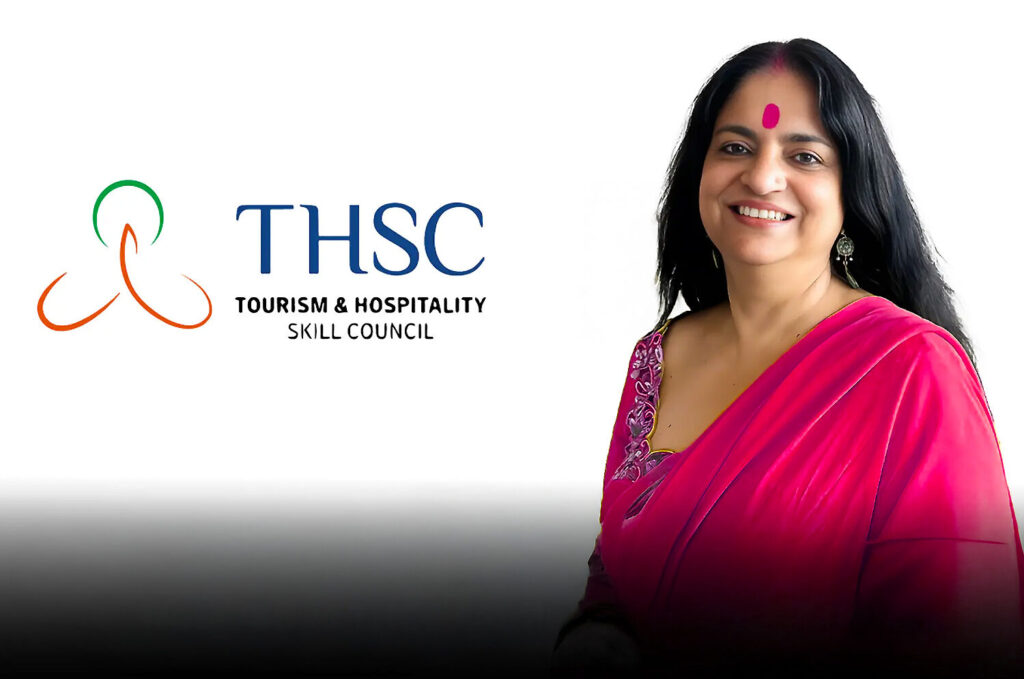
India’s tourism and hospitality sector concluded 2025 on a resilient and forward-looking note, marked by steady recovery, structural reforms, and the emergence of new growth opportunities. According to Jyoti Mayal, Chairperson, Tourism & Hospitality Skill Council (THSC), the industry displayed strong adaptability and renewed confidence despite intermittent global and domestic disruptions, laying a solid foundation for growth in 2026.
The year began on a positive trajectory, driven by robust domestic tourism demand, improved air connectivity, and the sustained popularity of spiritual tourism circuits, adventure travel, and short-duration micro-vacations. Several states reported double-digit growth in domestic tourist footfall, supported by festive travel demand and enhanced digital booking and service infrastructure. India’s G20 legacy continued to support inbound tourism awareness, particularly from Southeast Asia, Europe, and the Middle East.
However, 2025 was not without challenges. Global economic uncertainty impacted long-haul inbound travel during certain periods, while volatility in aviation fuel prices led to higher airfares, affecting travel sentiment and operating costs. The industry also continued to face shortages of trained manpower across tourism, hospitality, and aviation-linked services, highlighting the need for sustained and scalable skilling initiatives.
Despite these headwinds, the sector regained momentum in the latter half of the year. Government interventions, including enhanced e-visa facilitation, infrastructure development under Swadesh Darshan 2.0, and focused skilling programmes led by THSC, played a key role in stabilising and strengthening the tourism ecosystem.
Reflecting on the year, Jyoti Mayal said that 2025 emerged as a defining phase where resilience converged with transformation. She noted that targeted efforts towards workforce skilling, strengthening domestic tourism circuits, and improving service quality have positioned the sector in a stronger and more future-ready framework. She further emphasised the need for better-aligned tourism and aviation policies, stronger public–private partnership models, and expanded skilling outreach across regional and neighbouring countries through dedicated skilling hubs and clusters.
Looking ahead, the council expects 2026 to be shaped by three key drivers: continued dominance of domestic travel, accelerated investments in hospitality infrastructure across emerging tourist destinations, and a growing demand for specialised skills in areas such as sustainable tourism, digital hospitality, culinary innovation, and experiential travel services. With evolving traveller aspirations and increasing global attention on India as a culturally rich and value-driven destination, the sector is poised for sustained expansion.
Mayal added that bridging skill gaps, agile adoption of technology, and stronger collaboration between industry and training institutions will be critical to fully harness upcoming opportunities, positioning 2026 as a year of consolidation as well as growth.