
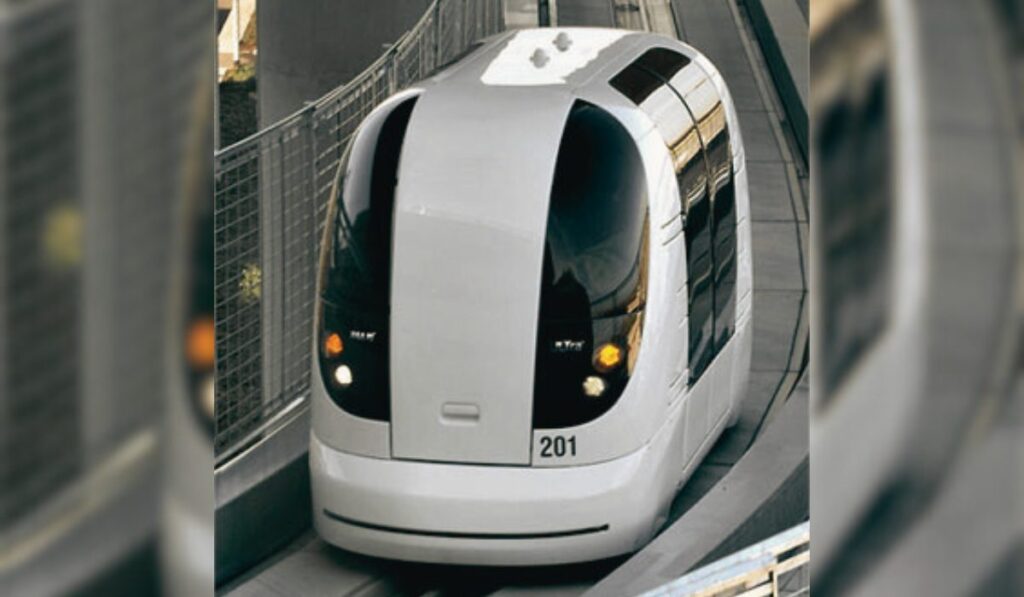
Mumbai is poised to take a significant step toward redefining urban transportation with the proposed introduction of pod taxis as part of its integrated public transport ecosystem. The initiative is aimed at addressing the long-standing challenge of last-mile connectivity in one of India’s most densely populated and congested metropolitan regions.
The Mumbai Metropolitan Region Development Authority (MMRDA) is developing the country’s first pod taxi project in the Bandra Kurla Complex (BKC), a major commercial and business hub of the city. The project’s first phase proposes an elevated corridor of approximately eight kilometres, connecting Bandra and Kurla to facilitate smoother and faster short-distance travel.
The corridor is planned to feature over 30 strategically located stations near prominent office complexes, metro stations and suburban railway nodes. This integrated approach is expected to significantly reduce reliance on road-based transport and improve connectivity between multiple modes of public transit.
The pod taxis will be electrically powered and fully autonomous, designed to carry between five and eight passengers per unit. With compact dimensions and urban-centric engineering, the pods are expected to operate at moderate speeds suitable for dense city environments, offering a predictable and efficient commuting option.
Safety and technology form a core component of the system. The pods are proposed to be equipped with advanced features such as cameras, radar, GPS navigation and real-time monitoring systems to ensure smooth and secure operations along the elevated network.
With daily commuters in Mumbai often spending extended periods to cover relatively short distances, the pod taxi initiative is being viewed as a forward-looking solution focused on sustainability, efficiency and smart urban mobility. Once implemented, the project could mark a major milestone in the evolution of public transport in India’s financial capital.