“Hello and welcome!
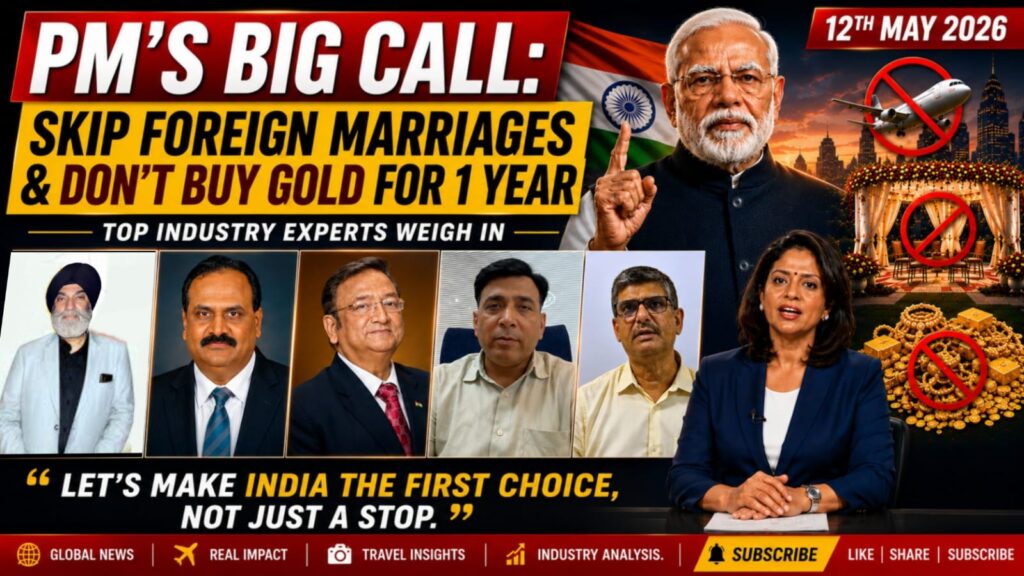
Tonight’s top story has triggered a major debate across India’s travel, tourism, jewellery, and business industries. Prime Minister Narendra Modi’s recent appeal asking Indians to prioritize domestic spending, avoid extravagant foreign destination weddings, and reduce gold purchases for one year has now become a nationwide talking point.
Is this simply an emotional appeal linked to nationalism? Or is it part of a larger economic strategy designed to strengthen India’s economy? Let’s break it down.
At the core of the Prime Minister’s message is one powerful idea — Spend in India, Celebrate in India, Invest in India. According to the PM, every rupee spent within the country directly contributes to employment generation, tourism growth, infrastructure development, local businesses, aviation, hospitality, and the overall economy.
Every year, Indian families spend billions of rupees on luxury destination weddings in places like Dubai, Thailand, Turkey, Italy, Bali, and across Europe. Now the question being raised is — can India itself become the preferred luxury wedding destination for wealthy Indian families?
Travel and tourism experts believe the answer is yes. From Rajasthan’s royal palaces and Goa’s luxury beach resorts to Kashmir’s scenic beauty and the Northeast’s untouched landscapes, India already offers world-class destinations capable of hosting global-standard weddings and celebrations. Industry insiders say that even if a fraction of these high-budget weddings shift back to India, the impact on tourism and hospitality could be enormous. Hotels, airlines, transport services, event companies, local businesses, and employment generation could all receive a major boost.
The Prime Minister’s second major appeal focused on reducing gold purchases for one year. India remains one of the world’s largest gold importers, spending billions annually on gold imports. Economists argue that excessive gold imports increase pressure on foreign exchange reserves, widen the trade deficit, and affect the strength of the Indian rupee. According to analysts, reducing import dependency while encouraging productive domestic spending could help improve economic stability in the long run.
Experts participating in this discussion say the conversation is no longer just about weddings or jewellery — it is about economic priorities. Some believe one year of financial discipline could strengthen India’s economy significantly, while others argue that personal spending decisions should remain a matter of individual freedom and lifestyle choice.
Industry voices supporting the appeal say India should become the first choice, not just a stop. They believe domestic tourism and hospitality can become major engines of employment and economic growth if Indians consciously choose to spend more within the country.
At the same time, critics point out that destination weddings and gold buying are deeply connected to culture, aspiration, and personal preference, making long-term behavioural change difficult.
But regardless of which side people support, one thing is clear — PM Modi’s appeal has sparked a nationwide debate on nationalism, spending habits, economic discipline, tourism growth, and India’s financial future.
So what do you think? Should Indians avoid foreign destination weddings and reduce gold buying for one year to support the economy? Share your opinion in the comments below.
If you enjoyed this report, don’t forget to like, share, and subscribe for more travel, tourism, and business news updates.
This is Suman, and you’re watching Travel World Online.”