
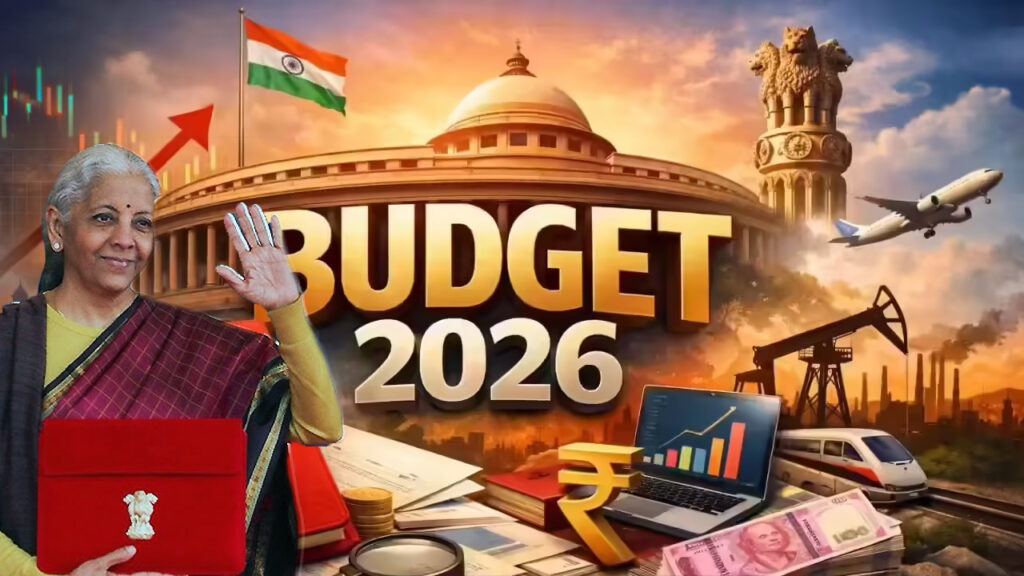
In a landmark Union Budget 2026 presented today, Finance Minister Nirmala Sitharaman delivered a powerful thrust to India’s travel, tourism and hospitality sectors — reinforcing them as critical drivers of employment, connectivity, foreign exchange earnings, and global competitiveness.
The Budget articulates a holistic, long-term vision that goes beyond traditional tourism support to include tax rationalisation, infrastructure connectivity, skill development, remote access, and experiential tourism frameworks — all designed to energise the industry’s growth trajectory.
✔ Major Tax Relief: TCS Rationalised to 2%
One of the most impactful announcements for both inbound and outbound travel businesses is the rationalisation of Tax Collected at Source (TCS) on overseas tour packages. The rate has been slashed to a flat 2%, replacing the earlier 5% and 20% slabs with no minimum threshold — effectively reducing upfront travel costs and enhancing consumer demand globally.
This move is expected to boost international travel bookings, improve cash flow for tour operators and travel platforms, and signal a pro-growth tax environment for tourism commerce.
�� Lower TCS also applies under the Liberalised Remittance Scheme for education and medical travel abroad, further easing the financial burden on families and travellers.
✔ Connectivity Reinvented: Roads, Rails, Water and Seaplanes
To unlock frontier tourism markets and strengthen overall mobility, the Budget introduces ambitious connectivity measures:
Seven new high-speed rail corridors have been announced to enhance rapid connectivity between key metros and emerging tourist regions — supporting faster business travel and regional circuit development.
A major push on national waterways includes plans for up to 20 new waterways over the next five years, reinforcing multimodal access to ports and inland water tourism circuits.
Seaplane manufacturing incentives and operational support mechanisms have been proposed to develop water-borne connectivity — especially linking remote and scenic locales where traditional transport has limited reach.
Infrastructure investment across highways and strategic corridor development is positioned to integrate remote destinations with mainstream tourism flows.
These measures collectively create a multidimensional mobility ecosystem that augments travel ease, seasonality resilience, and destination penetration for travel operators and hospitality chains.
✔ Strategic Tourism & Experience Architecture
The Budget’s design emphasises experiential tourism and cultural economy with multi-pronged programmes:
Development of 15 archaeological and heritage sites into immersive public destinations — blending culture, tradition and visitor experiences.
Establishment of five new tourism hubs (especially across eastern and northeastern states), enhancing regional economic participation and generating new demand clusters.
Creation of ecologically sustainable mountain and trail networks (in Himachal, Uttarakhand, J&K and key southern ranges), opening new nodes for trekking, adventure and nature travel — catalysing local livelihoods.
In addition, collaborative schemes to partner with high-impact institutions for professional guide training and hospitality excellence will help lift service quality and global visitor satisfaction metrics.
✔ Hospitality Human Capital & Institutional Strengthening
The tourism and hotel management sector receives a structural boost with the upgradation of the National Council for Hotel Management into the National Institute of Hospitality — designed to integrate industry practices with global standards, curriculum innovation and workforce readiness.
An allied pilot programme will upskill thousands of tour guides across iconic destinations, blending local cultural literacy with world-class customer engagement skills — directly benefiting destinations with high footfalls.
✔ Medical, Cultural & Global Travel Positioning
Budget 2026 positions India to take a leadership role in medical tourism, with new regional hubs supporting integrated healthcare, wellness and hospitality offerings — targeting high-yield inbound markets.
Lower tax burdens and simplified compliance for outbound travel also enhance the financial attractiveness of Indian travellers exploring global circuits.
Key Takeaways for Trade & Industry
Rationalised 2% TCS empowers travel demand and improves booking economics.
Cutting-edge connectivity through high-speed rail, waterways and seaplanes expands market reach.
Destination transformation projects elevate experience tourism and regional economic engagement.
Institutional capacity building strengthens hospitality talent pipelines.
Medical and cultural tourism hubs diversify portfolio offerings for inbound travel.
Bottom Line: Budget 2026 represents a paradigm shift from incremental tourism support to strategic, integrated industry reform — one that promises significant economic dividends, sustainable jobs, and enhanced global competitiveness for India’s travel, tourism and hospitality ecosystem.