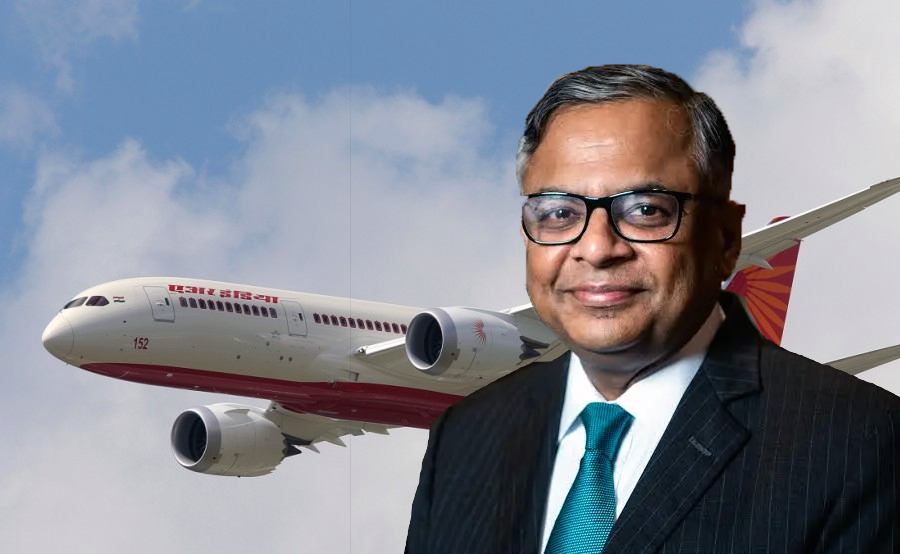
Air India is navigating a demanding phase, with Chairman N. Chandrasekaran calling for sharper focus on execution, cost control and operational precision during a recent employee town hall.
Addressing internal and external pressures facing the aviation sector, the leadership stressed that while long-term prospects remain intact, the current environment requires discipline, realism and consistent performance. Employees have been encouraged to prioritise efficiency and continuous improvement across all operational areas.
Safety, the chairman reiterated, remains the airline’s highest priority and a non-negotiable element in every decision. From engineering protocols and crew training to customer experience, the emphasis is on strengthening systems and ensuring uncompromised standards.
The airline has been dealing with multiple headwinds, including regulatory scrutiny and operational disruptions. A significant setback came in the wake of the Ahmedabad Boeing 787 crash, which intensified oversight and raised concerns around compliance and internal processes.
Compounding the situation, flight cancellations and schedule reductions have also impacted overall performance, adding to the pressure on operations.
Despite these challenges, the leadership remains cautiously optimistic. Employees have been urged to stay committed, collaborate effectively and maintain a customer-first approach as Air India continues its journey towards long-term transformation and operational stability.
Global geopolitical tremors and the resulting disruption of traditional long-haul flight paths are failing to ground the modern traveler. Instead of unpacking their bags, international voyagers are simply rewriting their itineraries, triggering a massive structural shift in global tourism that favors practicality over old-world aspirations. Leadership at Hyatt reports that despite a world map increasingly riddled with conflict zones and canceled routes, travel demand remains indomitable, signaling that travel has transitioned from a discretionary luxury to a non-negotiable lifestyle priority.
The action on the ground reveals a sophisticated traveler who is no longer deterred by regional uncertainty but has become an expert at navigating around it. Rather than retreating into cancellations, the industry is witnessing a massive redistribution of demand. This pivot is particularly benefiting the Asia Pacific region, as travelers flee the volatility of Middle Eastern hubs and European flight path restrictions. For the Indian market, this has manifested in a sharp rise in “safe-haven” destinations; travelers are increasingly swapping traditional Swiss or Parisian summers for more accessible and stable routes to Vietnam, Azerbaijan, and Japan.