

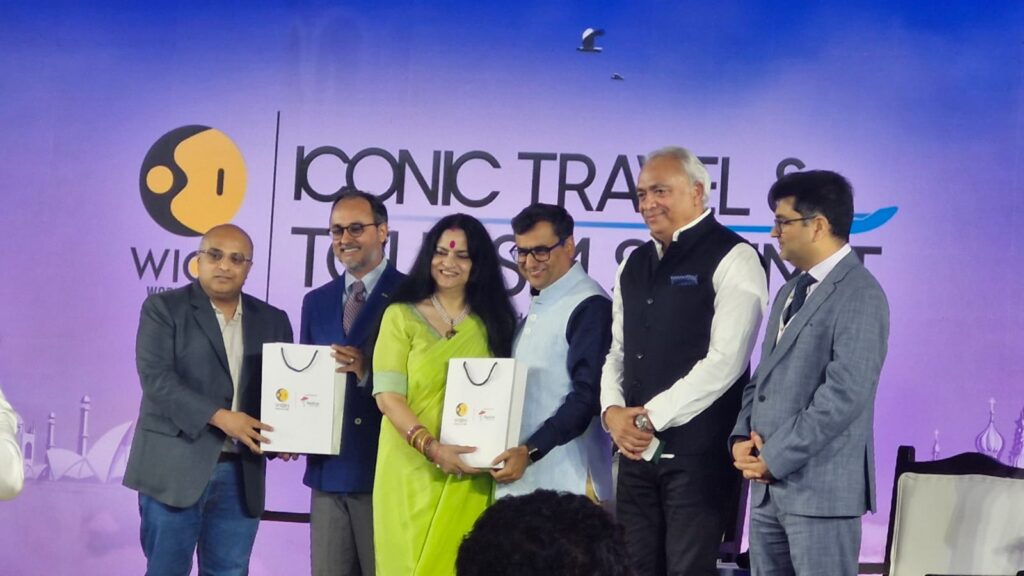
New Delhi: The second leg of the panel discussion at the Iconic Travel & Tourism Summit 2026 shifted focus to the direct impact of disruptions on costs, consumer behaviour, and operational realities, with industry leaders highlighting how rising fuel prices, financial pressures, and evolving traveller expectations are reshaping the sector.
Opening the discussion, Manish Puri pointed to the sharp surge in aviation fuel costs, noting that prices have nearly tripled and are expected to rise further. This, he said, is forcing airlines to reassess capacity and pricing strategies.
As airfares increase, travellers are not withdrawing from travel altogether but are *recalibrating their choices. “A customer planning Europe may opt for Vietnam, and someone considering Vietnam may settle for a domestic destination like Jaipur,” he explained, underlining a clear shift toward *price-sensitive travel decisions.
Domestic Tourism Gains Momentum
The discussion saw strong support for promoting domestic tourism as a buffer against global disruptions. Panelists noted that while international travel faces multiple headwinds—including route restrictions, geopolitical tensions, and cost pressures—India’s domestic market continues to offer stability.
Improved infrastructure, including highways and better connectivity, is playing a critical role in enabling this shift. Leaders highlighted that regional and leisure travel across states is steadily rising, with destinations across the hills, heritage circuits, and emerging locations gaining traction.
Customer Behaviour Evolves Toward Flexibility
A key theme that emerged was the *changing mindset of the modern traveller. With disruptions becoming frequent, customers are increasingly prioritising *flexibility and security in their travel plans.
According to Sandeep Dwivedi, travellers—especially younger, tech-savvy segments—are now:
- Opting for refundable fares
- Choosing flexible booking options
- Purchasing travel insurance and protection products
“Customers are no longer just looking at price—they are looking for solutions,” he noted, adding that the ability to offer alternatives during disruptions is becoming a key differentiator for brands.
Flexible Pricing Models Gain Acceptance
Airlines are responding by introducing multiple fare categories, allowing customers to choose between low-cost, non-refundable tickets and higher-priced flexible options.
Panelists observed that when these options are clearly communicated, a significant number of travellers are willing to pay a premium for peace of mind. However, there remains a gap in awareness, particularly in traditional booking channels, where the lowest fare is often prioritised over value-added flexibility.
Customer Concerns Take Centre Stage
An important intervention from the audience brought attention to refund challenges faced by travellers during disruptions, particularly in the aviation sector.
While acknowledging that airlines operate under financial constraints, panelists emphasised that customer-centric policies are evolving, with many operators offering waivers, free rescheduling, and faster refund processes during crisis situations.
The consensus was that while disruptions cannot always be controlled, transparent communication and faster resolution mechanisms are critical to maintaining customer trust.
Technology and AI Drive the Next Phase of Resilience
Technology emerged as a central pillar in managing disruptions. Industry experts highlighted that modern systems are now being designed not just to function, but to withstand and adapt to failures.
From cloud-based infrastructure to alternate system design, companies are investing in *resilient tech ecosystems. The role of *Artificial Intelligence (AI) is also expanding—from reactive solutions to predictive capabilities.
AI-driven tools are increasingly being used to:
- Anticipate disruptions
- Optimise pricing and capacity
- Offer real-time alternatives to travellers
“Disruptions cannot be prevented, but they can be managed better with the right technology,” was a key takeaway.
Supply Chain and Capacity Constraints Add Pressure
Beyond customer-facing challenges, panelists also highlighted supply-side constraints, including:
- Limited aircraft availability
- Delays in infrastructure and equipment
- Labour shortages across sectors
These factors, combined with rising costs, are creating a ripple effect across the industry—impacting pricing, service levels, and expansion plans.
Content, Social Media Fuel New Travel Aspirations
Interestingly, the discussion also touched upon how content and entertainment are influencing travel choices. Destinations featured in films, web series, and social media are witnessing a surge in interest, driving traffic to both domestic and international locations.
This trend, combined with improved accessibility, is opening up new tourism hotspots and diversifying travel demand.
Resilience Through Adaptation
As the session concluded, the overarching message was clear—the industry is not resisting disruption, but adapting to it.
From flexible fares and digital solutions to domestic tourism and evolving consumer behaviour, the travel ecosystem is undergoing a structural shift.
In this new landscape, resilience will not come from stability alone, but from the ability to anticipate change, respond quickly, and continuously innovate.