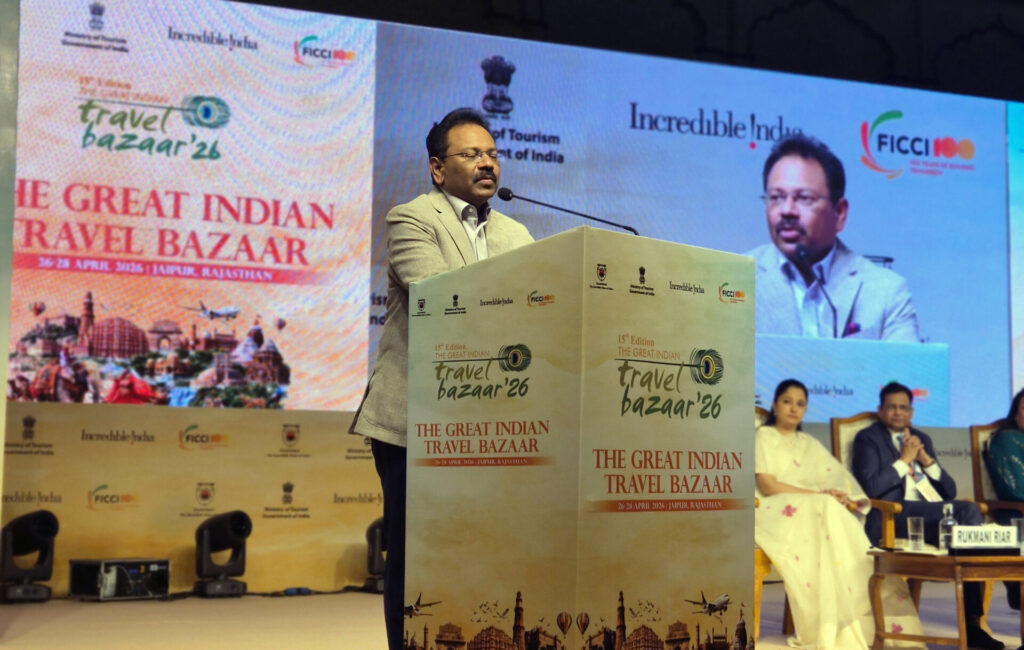
Suman Billa has outlined an ambitious roadmap for India’s tourism sector, stating that the country aims to double tourism’s contribution to GDP from around 5% to 10% within the next decade, in line with the national vision set by Narendra Modi.
Highlighting the sector’s growth trajectory, he pointed out that India’s tourism industry has already seen significant expansion over the past decade, driven by rapid infrastructure development and a strong domestic travel market.
India’s domestic tourism has witnessed a sharp surge, growing from approximately 1.5 billion visits in 2014 to over 4 billion in 2025. International tourist arrivals have doubled to around 20 million, while outbound travel has reached nearly 30 million. Foreign exchange earnings from tourism currently stand at about USD 32 billion, reflecting the sector’s growing economic importance.
He emphasised that this growth is backed by a major transformation in infrastructure. The number of airports in India has doubled over the past decade, while rail and road networks have expanded significantly. Modern trains and improved connectivity are now acting as key enablers for tourism growth, making destinations more accessible and travel more efficient.
Looking ahead, he noted that India’s aviation capacity is expected to nearly double by 2030, further strengthening the country’s ability to handle increased tourist flows. However, despite this progress, he acknowledged that India remains “under-leveraged” in tourism when compared to its vast cultural diversity and global potential.
To unlock this potential, he stressed the need for a focused push on expanding hotel capacity, developing destinations at scale, and elevating service standards to compete with leading global destinations. The goal is not only to attract high-value international travellers but also to retain Indian outbound travellers within the country.
At the same time, he highlighted the vulnerability of tourism to global disruptions, noting that the sector is often the first to be impacted and the last to recover during crises. This underlines the importance of building resilience, supporting businesses and safeguarding livelihoods within the tourism ecosystem.
His message was clear: India has built the foundational infrastructure and momentum—what is now required is a coordinated push to scale, compete globally and fully realise tourism’s economic potential.